
The Dog Daycare vs. Dog Park Debate
If you’ve ever wondered whether dog daycare or the dog park is better for your pup, you’re not alone. On the surface, both offer socialization and exercise. But when you look more closely at health, safety, structure, and long-term well-being, professional dog daycare offers significant advantages over public dog parks. At Camp Happy Paws, we believe dogs deserve more than “free-for-all” play. They deserve a safe, structured environment designed specifically for healthy social interaction. Here’s why.
1. Health & Hygiene: Controlled Environments Matter
One of the biggest differences in the dog daycare vs dog parks debate is health oversight. Dog parks are public spaces. That means no verification of vaccination status, no screening for parasites, no oversight of contagious illnesses, and shared water bowls and high-contact surfaces. Veterinary sources consistently report that intestinal parasites such as giardia, roundworms, and hookworms spread easily in communal environments. Fecal contamination in soil is one of the most common transmission routes, and parasites can persist in park environments long after waste is picked up. According to CDC guidance and veterinary public health research, parasite eggs such as roundworms can survive in soil for months under the right conditions, increasing exposure risk in shared outdoor spaces. Respiratory illnesses like canine influenza and kennel cough also spread rapidly in settings where vaccination status is unknown.
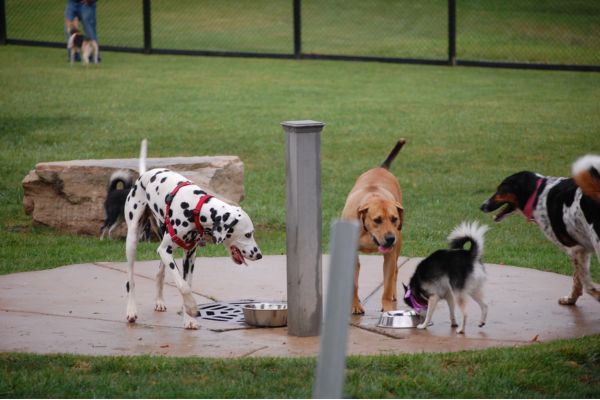
Professional dog daycare environments operate differently. At Camp Happy Paws, we require fecal testing every three months, up-to-date core vaccines, and regular booster compliance. We also evaluate every dog prior to joining group play to ensure they demonstrate appropriate social behavior and are a good fit for a structured pack environment. For the safety and stability of the group, we require all dogs to be spayed or neutered, as intact dogs can introduce hormonal behaviors that increase tension in social settings. That means every dog in our dog daycare program meets consistent health and behavioral standards. This dramatically reduces preventable illness, minimizes pack instability, and protects the entire group. In the rare event that a dog were to test positive for a parasite, we follow strict sanitization and cleaning protocols designed to prevent environmental spread and protect the rest of our campers. Instead of hoping other pet parents are responsible, you know every camper has been screened and that proactive systems are in place.
2. Safety: Supervised Play vs. Unstructured Chaos
Dog parks operate on a “community supervision” model. In reality, most pet parents stand on the sidelines while dogs self-regulate. The problem? Dogs are not always good at self-regulating. Research in canine behavior consistently shows that many conflicts stem from overstimulation, resource guarding (toys, water, even people), mismatched play styles, poor recall skills, and owners misreading body language. Many well-meaning pet parents often become distracted at dog parks or don’t recognize early stress signals like lip licking, whale eye, freezing posture, stiff tails, or play escalating from bouncy to rigid. By the time tension is obvious, it’s often too late. Studies in canine behavior research have found that many dog–dog conflicts stem from overstimulation and subtle stress signals that go unrecognized by owners, particularly in high-arousal environments like off-leash parks. Professional dog daycare changes the entire dynamic. At Camp Happy Paws, trained handlers are inside the pack, staff are educated in dog body language and pack dynamics, play groups are structured and thoughtfully matched, and intervention happens before conflict escalates. We don’t supervise from benches. We actively manage the group. Structured dog daycare play means dogs learn appropriate social behavior instead of rehearsing bad habits. That makes daycare not just safer — but developmental.
3. Convenience for Busy Pet Parents
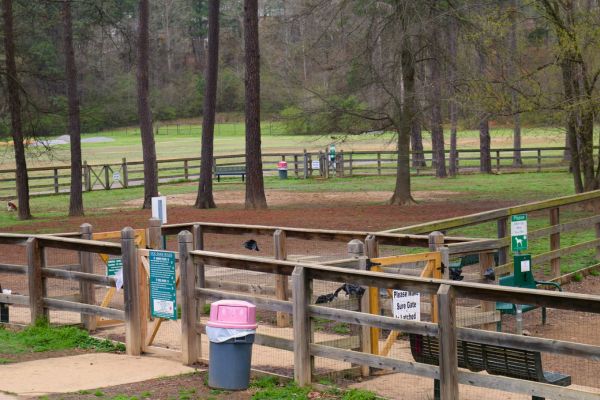
Let’s be honest: dog parks take time. You drive there. You stand there. You monitor constantly. You hope your dog burns enough energy. For working families in Bothell, Mill Creek, and surrounding areas, time is valuable. Dog daycare allows you to drop off your dog before work, run errands uninterrupted, schedule appointments, and focus fully on your responsibilities. Instead of carving out a separate trip to the park, your dog’s socialization and exercise happen while you handle your day. You get a fulfilled dog at pickup — without losing your own time.
4. Mental Stimulation & Emotional Well-Being
Dogs are social animals. When left home alone for long stretches, many experience boredom, loneliness, or anxiety. Behavior professionals consistently note that under-stimulated dogs are more likely to develop destructive chewing, excessive barking, digging, escape behaviors, or hyperactivity in the evenings. Dog parks provide short bursts of stimulation, but dog daycare provides consistent social enrichment. When dogs attend daycare consistently, they form bonds with familiar dogs, build trust with handlers, learn predictable routines, and gain confidence in social settings. Seeing the same pack friends repeatedly creates stability. Dogs thrive on familiarity and structure. Instead of random, unpredictable interactions at a public park, they enjoy curated play with dogs who match their temperament and energy level. That consistency reduces stress and builds better social skills over time.
5. Quality of Play: Structured Socialization vs. Random Mixing
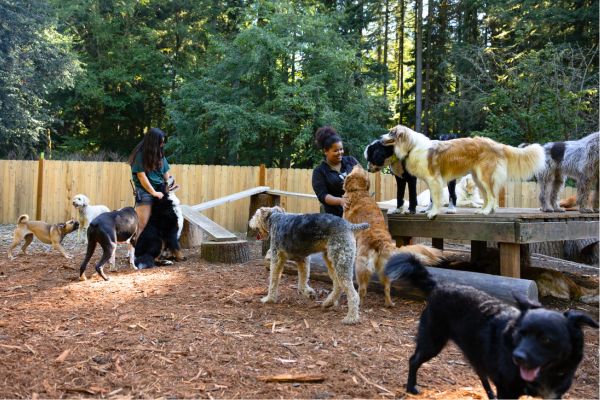
Not all socialization is equal. Dog parks mix large and small dogs, puppies and seniors, shy dogs and pushy dogs, and dogs with unknown training backgrounds. Without screening or temperament assessments, mismatches happen constantly. At professional dog daycare, dogs are evaluated before joining group play. Groups are designed intentionally. That means appropriate energy matching, breaks to prevent overstimulation, redirection when play gets too intense, and guidance toward healthy social behavior. Instead of chaos, you get curated play. And that makes a long-term difference in behavior.
Addressing the Common Argument: “But Dog Parks Are Free”
Yes — dog parks are free. But veterinary bills from preventable illness or injury aren’t. When comparing dog daycare vs. dog parks, the question isn’t just cost. It’s value. Dog daycare provides health screening, professional supervision, behavioral development, structured enrichment, strict sanitization standards, and time savings for pet parents. You’re not just paying for a space. You’re investing in safety, structure, and your dog’s well-being.
The Bottom Line: Not All Socialization Is Created Equal
Dog parks can work for some dogs in some situations. But they rely heavily on variables you cannot control. Professional dog daycare offers controlled health standards, trained supervision, structured socialization, ongoing behavioral support, and convenience for busy families. At Camp Happy Paws, our goal isn’t just to let dogs run — it’s to create a safe, healthy environment where they thrive. If you’re looking for dog daycare in Bothell that prioritizes health, safety, and joyful socialization, we’d love to show you what structured play looks like.